
Quick answer: A washing machine smell is usually caused by mould and bacteria growing in leftover detergent, fabric softener, and moisture. The worst spots are the door gasket, the detergent drawer, and the drain pump filter. To get rid of it, run your washer’s cleaning cycle with a washer cleaner or bleach, wipe out the gasket and drawer, clean the drain pump filter, use less detergent, and leave the door open between loads.
Opening the washer to a musty or sour smell is unpleasant, and that smell can end up in your “clean” laundry. The good news is that most washer odours can be fixed with an hour of cleaning and a few new habits. This guide explains what causes the smell and gives you 8 tips to get rid of it, for homeowners in London, Woodstock, St. Thomas, and the surrounding area.
What causes washing machine smell?
Different smells point to different causes. Use this table to narrow it down:
| What it smells like | Most likely cause | What to do |
|---|---|---|
| Musty or mildew | Mould in the door gasket, detergent drawer, or drum from leftover detergent and moisture | Tips 1 to 3 and 6 below |
| Rotten eggs or stagnant water | Standing water and debris in the drain pump filter | Tip 4 below |
| Sewage | A drain problem in the house plumbing, such as a dry trap or a drain hose pushed too far into the standpipe | See the sewer smell section below |
| Sour smell on clean clothes | Wet laundry left in the drum, overloading, or too much detergent | Tips 5, 7, and 8 below |
| Burning or electrical | A motor, belt, or wiring problem | Stop using the washer and call a technician |
A few habits make odours much more likely:
- Too much detergent or fabric softener. Modern high-efficiency washers use very little water, so extra soap doesn’t rinse away. It builds up and feeds bacteria and mould.
- Keeping the door closed. A washer is damp after every cycle. Closing the door traps that moisture inside.
- Owning a front loader. Front-load washers are more prone to smells, because water and lint collect in the folds of the rubber door gasket.
- Never running a hot cycle. Washing in cold water saves energy and is fine for everyday loads, but without an occasional hot cleaning cycle, residue builds up faster.
8 tips to get rid of washing machine smell
1. Run a monthly cleaning cycle
Once a month, run an empty cleaning cycle. Many washers have a “Tub Clean” or “Clean Washer” setting. If yours doesn’t, use the hottest, longest cycle. Add a washer cleaner tablet or liquid chlorine bleach, following the amount in your owner’s manual.
Important: Never mix bleach with vinegar, ammonia, or other cleaners. Health Canada warns that mixing bleach with acids like vinegar creates toxic gases. If you use vinegar at any point, run a separate rinse cycle before using bleach. Some manufacturers also advise against using vinegar often, because it can wear out rubber seals over time, so check your manual first.
2. Clean the rubber door gasket
On front loaders, the gasket is the most common source of washing machine smell. Pull back the folds and wipe out any water, lint, hair, and black mould spots. Use a cloth with warm water and a little dish soap, or a diluted bleach solution for stubborn mould. Check the bottom of the gasket for small items like socks or coins. Then dry the gasket with a towel.
3. Clean the detergent drawer
Pull the detergent drawer all the way out. Most drawers have a release tab. Soak it in warm, soapy water and scrub away the slimy residue with an old toothbrush. Clean the drawer opening too, where mould often grows out of sight.
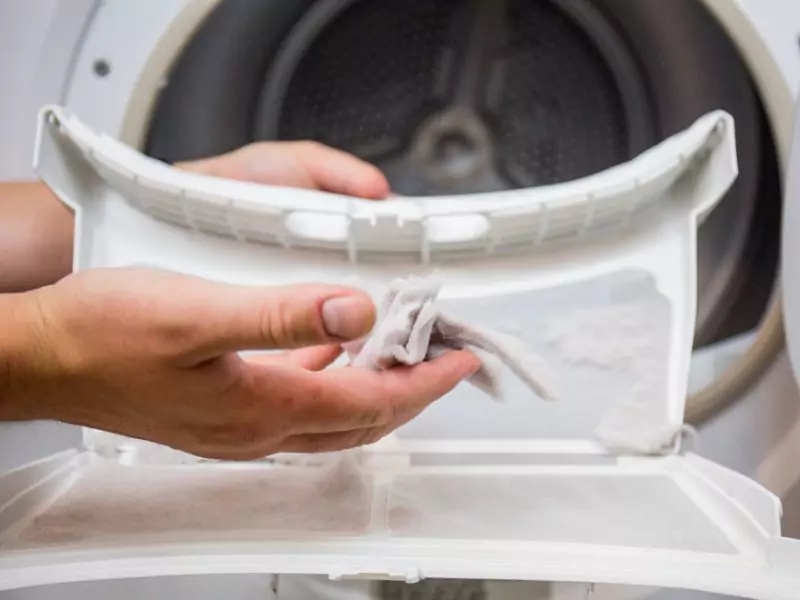
4. Clean the drain pump filter
Most front-load washers have a drain pump filter behind a small panel at the bottom front of the machine. It catches coins, hair, and lint, and it always holds some dirty water. That standing water is a common cause of rotten-egg smells.
To clean it, lay down towels and place a shallow pan under the filter. Some water will come out. Slowly unscrew the filter, let the water drain, remove the debris, and rinse the filter under the tap. Screw it back in firmly so it doesn’t leak. Check your manual for the exact location, and clean the filter every few months.
5. Use the right detergent, and less of it
If you have a high-efficiency washer, use detergent marked HE, and use less than you think. The fill line on the cap is often more than you need, especially for small loads. Cut back on fabric softener too, since it’s one of the main causes of slimy buildup.
6. Leave the door and drawer open
After each wash, leave the door or lid open and the detergent drawer slightly open so the inside can dry. If you have young children or pets, keep the laundry room door closed instead, and make sure no one can climb into the drum.
7. Take out wet laundry right away
Wet clothes left in the drum for hours start to smell, and they make the washer smell too. Move laundry to the dryer or a drying rack as soon as the cycle ends.
8. Don’t overload the washer
An overloaded drum doesn’t rinse properly, which leaves detergent and dirt behind in both your clothes and the machine. Fill the drum no more than about three-quarters full, with room for clothes to tumble.
What if your washer smells like sewage?
A true sewer smell usually comes from the house drain, not the washer itself. Common causes include:
- A dry drain trap. If the laundry room has a floor drain or laundry sink that’s rarely used, the water in its trap can evaporate and let sewer gas in. Pour water down it to refill the trap.
- A drain hose pushed too far into the standpipe. This can let dirty water siphon back or let sewer gas escape. The hose should go only a short way into the pipe. Check your installation manual for the right depth.
- A partly clogged drain line. Slow drainage leaves dirty water sitting in the pipe.
If the smell continues after these checks, you may need a plumber for the drain, or an appliance technician to check the washer’s drain system.
When to call a technician
If the washing machine smell comes back quickly after a thorough cleaning, something may be trapping water inside the machine. Call for a repair if you notice any of these signs:
- Water stays in the drum after a cycle.
- The drain pump filter keeps clogging.
- The washer leaks.
- You smell burning.
If your washer is older and has other problems too, our guide on whether to repair or replace a washing machine can help you decide. For other appliances, see our guides to common dryer problems and what to do when your dishwasher is not cleaning.
Frequently asked questions
Why does my front-load washer smell?
Front loaders seal tightly and use little water, so moisture and detergent residue collect in the door gasket and drain pump filter, where mould and bacteria grow. Clean the gasket and filter, run a monthly cleaning cycle, and leave the door open between loads.
How often should I clean my washing machine?
Run a cleaning cycle and wipe the gasket and detergent drawer about once a month. Clean the drain pump filter every few months, or more often if you wash pet bedding or heavily soiled items.
Can I use vinegar to clean my washing machine?
Vinegar can help remove residue, but some manufacturers advise against frequent use because it can wear rubber seals. A washer cleaner or bleach, used as your manual directs, is usually a better choice. Never use vinegar and bleach together.
Why do my clothes smell after washing?
Usually because the washer itself smells, laundry sat wet in the drum too long, the drum was overloaded, or too much detergent was used. Clean the washer, use less detergent, and dry laundry right after the cycle ends.
Which areas does Fixton Appliance Services cover?
Fixton repairs washing machines, dryers, dishwashers, and other home appliances in London, Woodstock, St. Thomas, Strathroy, Tillsonburg, Ingersoll, Aylmer, and St. Marys, Ontario.
Still smelling something after cleaning?
If your washer still smells after a thorough cleaning, or it isn’t draining properly, Fixton Appliance Services can diagnose the problem and give you a clear quote. We serve homeowners in London, Woodstock, St. Thomas, Strathroy, Tillsonburg, Ingersoll, Aylmer, and St. Marys. Request service online or call us at (548) 800-5995.